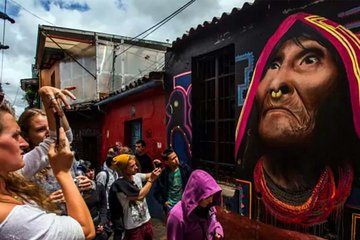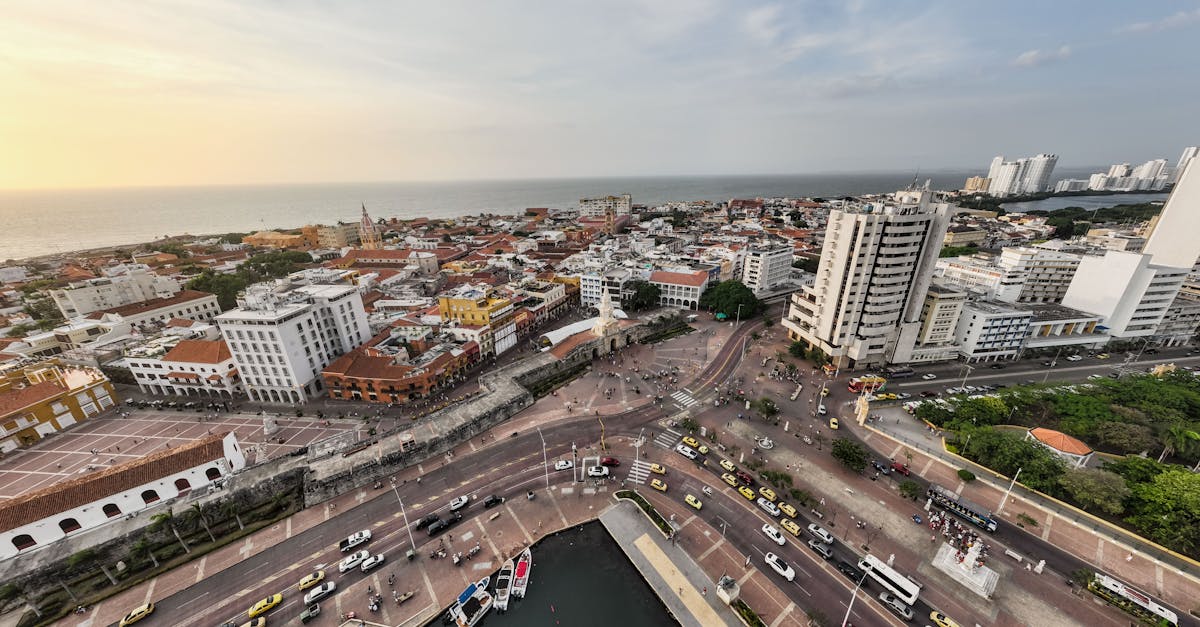
The gilded altar of the Cartagena Cathedral, with its intricate Baroque carvings and the faint scent of incense that still lingers after centuries, is the first image that pops into my mind when I think of this coastal city. Standing beneath that masterpiece, I felt a direct line to the artists and craftsmen who shaped Cartagena’s visual story long before the modern tourist crowds arrived. That moment set the tone for my entire exploration of the city’s art scene, and it’s the perfect launchpad for anyone eager to trace the layers of history, color, and creativity that define Cartagena today. Why Cartagena Is ideal for Art and History Lovers # Cartagena’s old town, the Walled City, is a living museum of colonial architecture, each façade a canvas of pastel hues and stonework that has survived pirate raids, earthquakes, and the passage of time. Walking its cobblestone streets, you’ll encounter the Palace of the Inquisition, where the stark, somber interiors contrast sharply with the bright murals that now adorn its walls, telling stories of both oppression and resilience. The city’s artistic pulse isn’t confined to museums; street art blooms in neighborhoods like Getsemaní, where massive murals celebrate local legends and contemporary social themes.
The moment I stepped into the Gold Museum, the intricate details of the gold leaf work on the walls and ceilings impressed me. The museum’s stunning collection of pre-Columbian gold artifacts, including the famous “El Dorado” exhibit, set the stage for my exploration of Bogota ’s deep history. As a culture and art travel blogger, I’m always on the lookout for destinations that offer a deep dive into history and creativity, and Bogota delivers in spades. Why Bogota Is ideal for Art and History Lovers # Bogota’s art scene is a lively mix of traditional and contemporary expressions. The city’s deep history is evident in its museums, galleries, and public art installations. From the pre-Columbian gold artifacts at the Gold Museum to the modern street art that graces the city’s walls, there’s something for every art and history lover to appreciate.
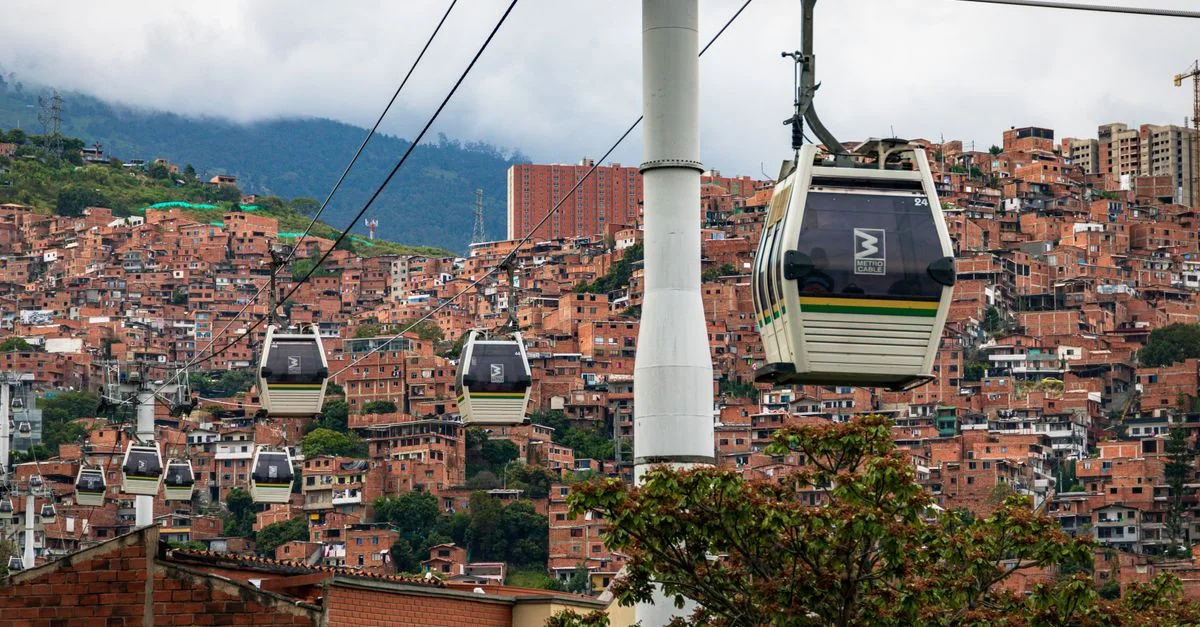
Standing in the courtyard of Museo de Antioquia, my eyes trace the bronze curves of Fernando Botero’s monumental La Mano sculpture. The exaggerated proportions, so characteristic of the master’s aesthetic, ground you immediately in the artistic identity of this Andean metropolis. Medellín has undergone a profound transformation over the past three decades, shifting from a city defined by turbulence to one shaped by public art, community-led murals, and forward-thinking urban design. When you walk these streets, history is etched into every plaza and painted across hillside favelas. Why Medellín Is ideal for Art and History Lovers # Art in Medellín is not confined behind glass climate-controlled cases; it spills directly onto the streets. Plaza Botero acts as an open-air gallery containing twenty-three bronze sculptures donated by the artist himself, creating a shared civic living room where locals and travelers intersect daily. Beyond the sculptures, the city’s urban transformation is legendary. Metrocables slice through the mountain air, connecting previously isolated hillside neighborhoods to the valley floor and democratizing access to culture.
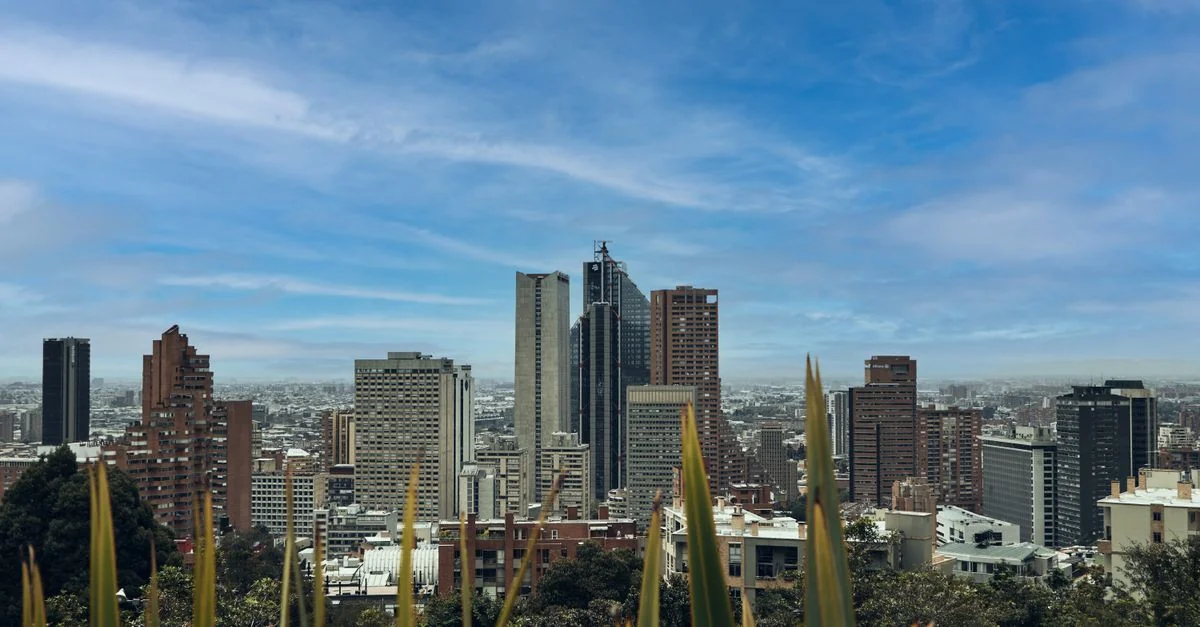
Standing before the bronze sculpture of a rotund, reclining woman in the courtyard of the Botero Museum, I am struck by the way the light catches the exaggerated curves of the metal. It is a moment of quiet reflection in the heart of La Candelaria. Bogotá is a city that demands your attention through its walls, which are often covered in intricate graffiti, and its quiet, colonial-era courtyards that house some of the most significant collections in South America. The city functions as a dialogue between its colonial past and a modern, often defiant, artistic spirit. Why Bogotá Is ideal for Art and History Lovers # Bogotá is not a city that reveals itself instantly. It requires a slow pace. The altitude, sitting at 2,640 meters, forces you to slow your breathing and, consequently, your movement through the city’s galleries. The local art scene is defined by a tension between the traditional and the contemporary. You see this in the architecture of the historic center, where heavy wooden doors lead into bright, airy galleries that house works by masters like Fernando Botero.
When the afternoon sun hits the lime-washed facades of Popayan’s historic center, the entire city glows with a blinding, uniform brilliance that earned it the nickname Ciudad Blanca. My eyes trace the intricate stone portals and heavy wooden balconies of the 17th-century colonial homes, pondering the labor of the masons who carved these Spanish-Andalusian motifs into the Andean rock. This architecture is not merely decorative; it serves as a physical archive of the colonial administration that governed southwestern Colombia for centuries. Why Popayan Is ideal for Art and History Lovers # Walking through the colonial grid of Popayan feels like moving through an open-air museum of ecclesiastical and civic architecture. The central plaza, Parque Caldas, anchors a historic core defined by whitewashed walls, red-tile roofs, and grand stone churches such as the Cathedral of Our Lady of the Assumption and the Church of San Francisco . These structures house significant collections of religious art, featuring wooden sculptures and oil paintings from the Quiteña and Quiteño colonial art schools. The city’s cultural identity is deeply tied to its religious processions during Holy Week, a tradition recognized by UNESCO, which brings sacred colonial artifacts out of the museums and into the public streets.
Photo by K on Pexels Cartagena de Indias is a city where the past and present beautifully intertwine. One of the most striking elements is the stunning mural “La Gente de Cartagena,” which captures the spirit of the city’s diverse inhabitants. This artwork is a reminder of the local culture and history that permeates every corner of the city. As I strolled through the narrow streets, I found myself enveloped in a lively atmosphere filled with art, music, and stories waiting to be uncovered.