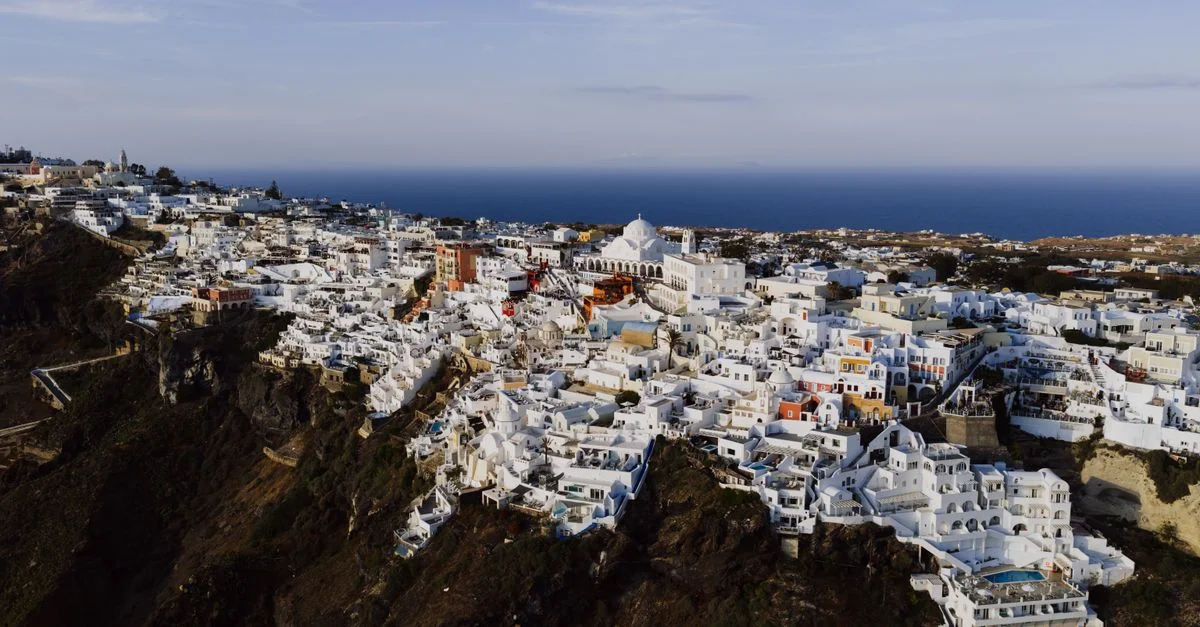
Tracing Volcanic Pasts: An Art and Culture Guide to Fira
In 1967, archaeologists digging beneath the volcanic ash of Akrotiri—just a short distance from the cliffs of Fira —unearthed frescoes depicting saffron gatherers and young boxers painted more than three millennia ago. Standing on the caldera edge today, peering down at the sea-filled crater, those ancient pigments frame how I approach this Cycladic capital. Fira is not merely a postcard backdrop of blue domes and white-washed walls; it is a layered site where geological catastrophe preserved an extraordinary Aegean civilization. If you want to understand the physical and cultural foundation of this island beyond the cliffside cafes, you need to look closely at the remnants of its sacred architecture and deep archaeological record. Why Fira Is ideal for Art and History Lovers # When travelers step off the cable car or finish the climb up the stairs from the old port, many head straight for the souvenir shops. That is a tactical error if your goal is cultural engagement. Instead, turn your focus toward the Orthodox Metropolitan Cathedral and the Catholic Cathedral of Saint John the Baptist, which anchor the town’s spiritual geography. These structures reveal the architectural adaptation of a community rebuilding after earthquakes, utilizing local stone and neoclassical influences shaped by Venetian and Greek Orthodox histories.