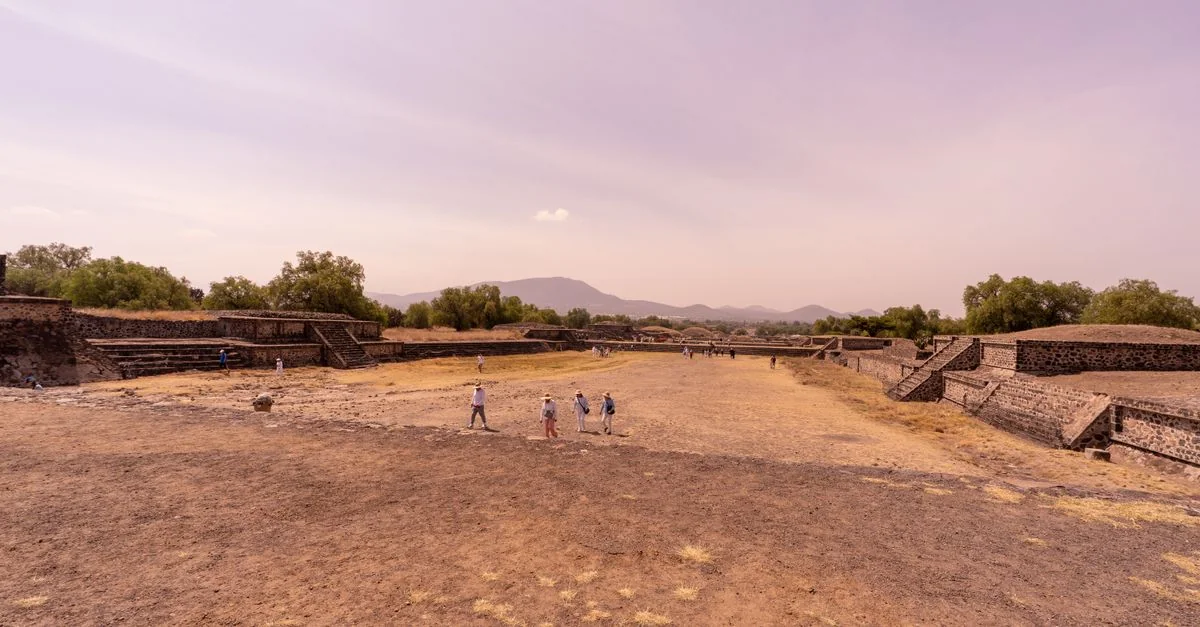
San Juan Teotihuacan: A Study in Ancient Geometry and Pigment
The sight of the Pyramid of the Moon, perfectly aligned with the Avenue of the Dead, forces a shift in perspective. Standing at the base of this massive stone structure, one realizes that Teotihuacan was not merely a city, but a meticulously planned architectural statement. The builders utilized volcanic stone and lime plaster to create a grid that has dictated the movement of visitors for centuries. While the scale of the pyramids often dominates the conversation, the true intellectual weight of this site lies in its surviving mural fragments, which offer a rare glimpse into the complex social hierarchy and religious devotion of the people who occupied this valley long before the Aztec expansion. Why San Juan Teotihuacan Is ideal for Art and History Lovers # Walking through the residential compounds, such as Tetitla or Atetelco, reveals the sophisticated artistic sensibilities of the Teotihuacanos. The walls here were once covered in elaborate frescoes depicting jaguars, feathered serpents, and ritual processions. These paintings were not decorative in a modern sense; they were functional, serving to reinforce the status of the ruling families and the cosmic order of the site. Observing the remnants of red hematite pigments that still cling to the stucco allows for a direct connection to the hands that applied them nearly two millennia ago.